
What a screenplay consultant actually gives you
A good consultant does not simply announce whether the script is good. They create distance between you and pages you know too well. They notice the promise of a scene, the moment attention drifts, the character whose choices are not quite driving the action and the rewrite question hiding underneath a vague feeling.
That outside perspective is valuable because the writer is carrying the intended film as well as the written one. Readers only receive what reached the page.
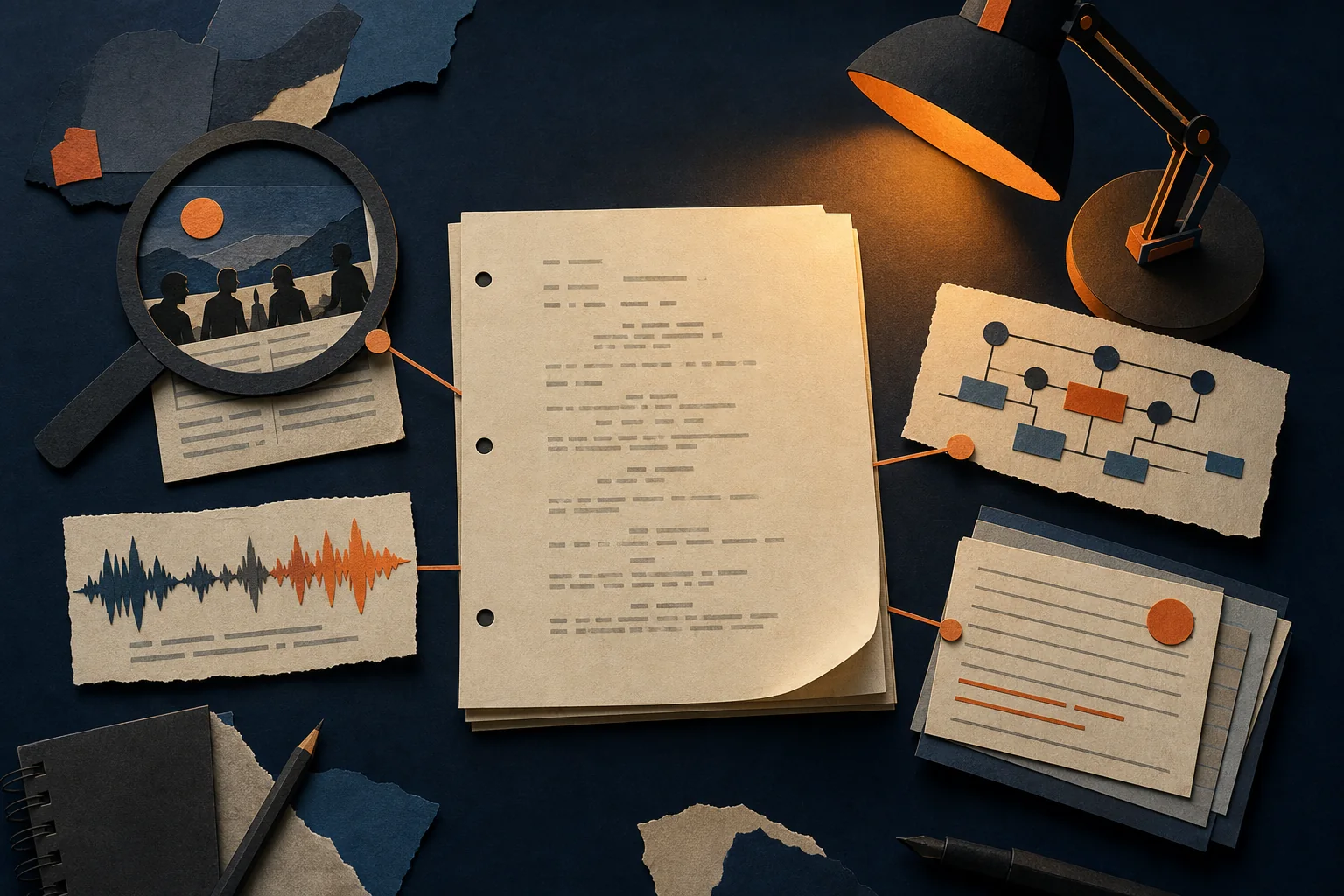
ForgePad brings that consulting rhythm into the writing workspace. Scene reports can surface purpose, conflict, tension, strengths, weaknesses and practical rewrite possibilities. A visual beat sheet shows the shape of the story. Character-voice table reads let you hear rhythm and repetition. The point is not to hand the screenplay over. It is to see it from another angle while every decision still belongs to you.
Use ForgePad like a consultant, not a verdict machine
The most useful consultation begins with a question. “Tell me everything about my screenplay” usually produces too much information. “Does this scene force Mara into a harder choice?” gives the feedback a job.
- Finish the scene or sequence before judging every line.
- Write down the single question that is stopping the rewrite.
- Run the relevant ForgePad report and read it once without editing.
- Mark observations that match evidence on the page.
- Choose one rewrite pass rather than obeying every suggestion.
- Use a table read or beat sheet to test whether the change improved the experience.
Keep the report beside the draft, but do not rewrite while staring at it sentence by sentence. Read, decide, then return to being the writer.
The consultation can grow with the project
ForgePad is connected to ScriptForge.art. The same account works across both, so the draft can move from day-to-day writing in the Mac app into deeper reports, coverage, evaluations and development tools on the wider platform.
That matters because a screenplay does not need the same kind of help at every stage. Early pages may need scene-level questions. A complete draft may need a structural overview. Dialogue may need to be heard rather than scored. A writing partner may need one shared version instead of another exported attachment.
The advantage is not receiving more notes. It is being able to ask for the right kind of perspective at the moment the draft needs it.
What ForgePad should not replace
A tool cannot reproduce the taste, lived experience, industry knowledge or emotional response of a trusted human reader. Nor should it pretend to. Use ForgePad for frequent diagnostic work: scene purpose, pacing patterns, dialogue rhythm, structural visibility and rewrite planning. Bring in human readers when you need interpretation, cultural specificity, market context or the difficult truth of how another person actually felt.
This combination is often stronger than choosing one side. ForgePad helps you arrive at a human read with a more complete draft and better questions. The consultant, writing group or producer can then spend their attention on the choices that genuinely require a person.
Ask the draft one useful question
Open a scene in ForgePad, generate a focused report and turn the clearest observation into your next rewrite move.
Write in ForgePad ↗